
All About English Literature: Literary Essay

For Exclusive Notes and Analysis

Showing posts with label Literary Essay. Show all posts

Saturday, 27 June 2020

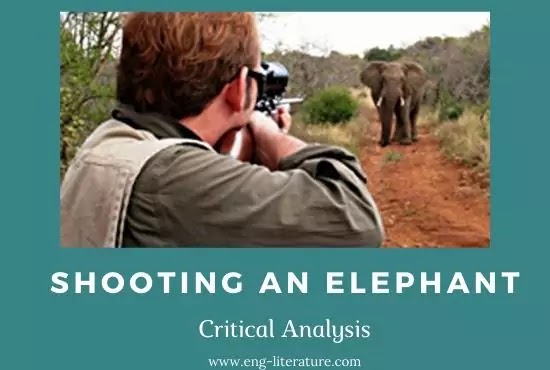
Shooting an Elephant : Critical Analysis or Orwell's View on Imperialism

Shooting an Elephant : Critical Analysis or Orwell's View on Imperialism
Shooting an Elephant as a Postcolonial Essay

Louis Cazamian in A History of English Literature declares George Orwell's work as a whole to be "the citizen's manifesto against the powers that be". Even from his youth, Orwell rejected many of the accepted social and political conventions, and his novels and essays clearly reveal him as a non-conformist. In all his novels and in many of his essays, his strongly dissenting voice can be clearly heard. And though Shooting an Elephant is a narrative essay, it gives us a fairly clear idea of Orwell's view of British imperialist domination in the East.

Even from the start of his career as a police officer in British occupied Burma, Orwell was not favourably disposed to the British imperialist policy. He had a genuine sympathy for the oppressed native people, and he hated himself for being a tool of imperialist domination. But even so, he did not quite realise how utterly futile was the white man's domination in the East. This he came to realise through an experience which has been described in his essay Shooting an Elephant.

The author was then a sub-divisional police officer in Moulmein. a township in Lower Burma. One morning, he received the news that an elephant, under the attack of 'must' had broken its chained was ravaging the bazaar area. So he started out with his light rifle to see what the matter was. On his way, he received a lot of conflicting reports on the behaviour of the elephant. Finally he reached the locality where the animal had been last seen. Then the veils of a woman attracted his attention. As he went forward the dead body of a black Dravidian coolie came into his view. He had been trampled to death by the elephant. At once the author sent an orderly who fetched an elephant rifle for him. At the sight of this weapon, the people who had gathered there became greatly excited because they now took it for granted that the sahib was surely going to shoot the elephant. But, till that moment, the author did not have the slightest intention of killing the elephant.

As he went a little farther, he saw the elephant in a paddy field. It looked peaceful enough, and the author felt there was no reason for killing it unless it turned savage again. At this moment, he turned round and saw that a huge crowd of natives had followed at his heels. Looking at their eager, expectant faces, he suddenly realised the absolute helplessness of his position. He felt that, in spite of all his reluctance, he would have to shoot the elephant, after all. For, in that critical situation, he was expected to live up to the image of the white men in the colonies-a man of extra-ordinary strength, courage and determination, who must remain unmoved in the face of every crisis. Thus, he was not free to act according to the dictates of his own conscience. He was a mere puppet driven by the will and expectation of the thousands of natives surrounding him. At the moment of crisis, he realised the bitter truth : "when the white man turns tyrant it is his own freedom that he destroys." Thus, from his own experience, he realised that the white man's superiority over the natives was but a hollow myth with no substance at all.

The essay starts with a reference to the strained relations between the ruler and the ruled in Moulmein, a township in Lower Burma. Anti-European feelings ran high among the native people though they did not have the courage to rise in open rebellion against British domination. So their hatred of the white man found expression through devious ways. They never missed an opportunity of baiting white men or jeering at them. They would even try to inflict injuries on white men whenever they could do it with impunity, As a police officer, the author was an obvious target of such petty attacks and insults. Sometimes the author felt tempted to have his revenge on these jeering "devils', but his better reason always prevailed. He rightly recognized such feelings as the 'normal by-products' of imperialism and he rather hated himself for serving a power that oppressed people and held them in subjection.

But there are, in this essay, far more overt references to the evils of imperialism. As a police officer in Burma he had seen ‘the dirty work of Empire at close quarters’. He refers to the lock-ups as 'stinking cages’ in which native prisoners were huddled like cattle, He has a vivid memory of the ‘cowed faces’ of long-term convicts and the 'scarred buttocks’ of men who had been flogged with bamboos.

But his greatest accusation against imperialism is of a radically different nature. In this essay he asserts that the shooting of the elephant gave him a better glimpse of the real nature of imperialism than he ever had before. It is this incident that opened his eyes to the 'hollowness, the futility of the white man's domination in the East'. In order to make its domination safe and secure, imperialism has to build up a highly inflated image of the white man. Thus he loses his freedom of action. He must not act according to the dictates of his conscience; he must act in strict conformity with the codes of conduct established by imperialism. The author had shot the elephant much against his will. While, apparently, the author was the leading actor of the piece in reality he was 'an absurd puppet' driven by the will of the crowd that surrounded him. Thus, imperialism harms and oppresses not only the subjugated people; it also harms its own servants by subjecting them to a process of moral and psychological degeneration.

Even the advocates of imperialism would find it difficult not to agree with Orwell's view of its harmful effects. History has confirmed his views even to the last detail.

And the history of our country under the British rule bears ample evidence to the evils of imperialist domination. As to the evil effects of imperialism, Orwell's views have been confirmed by many white men who have served in the colonies.

But it would be going rather too far to describe Shooting an Elephant as 'a critique of imperialism'. Orwell's primary aim in this essay was to describe an incident which had made deep and lasting impression on his mind. The views on imperialism expressed here are but incidental to the main theme of the essay. So it would be more pertinent to describe Shooting an Elephant as a narrative essay incorporating certain relevant criticism of imperialist domination in the East.
~~~~~*~~~~~
Share:

Saturday, 20 June 2020

What according to Arnold are the Essential Features of a Modern Age? How far did ancient Greece exhibit them?

What according to Arnold are the Essential Features of a Modern Age? How far did ancient Greece exhibit them?

On the Modern Element in Literature is the inaugural lecture of Mathew Arnold delivered as a professor of poetry at Oxford in the year 1857. In this essay, he shows us how an age can rise above the false ideology of modernism by strictly following the rich convention of the past, especially those of ancient Greece. Tormented by the growing materialism in the name of modernity and advancement, of his age, Arnold did attempt to measure the true direction of modernity.

Arnold lays down the characteristics which are the features of a modern age. He begins his lecture stressing the true meaning of moral and intellectual deliverance, which, he believes can be achieved through a simultaneous appreciation of past and present. Subsequently, he refers to both external and internal features that make an age truly modern.

The basic feature of an advanced civilization is to free its denizens from fear of wars and battles. It is not that they should completely be stopped, as it is hardly possible, it should not be allowed to affect the daily intercourse of life. The citizens should feel free from the danger of violence. Crime and political confrontations will persist but they should be confined within a strict limit so that peace in the community persists. And above all there should hardly be any individual considering himself above and beyond law. In fact, in modern society, a harmonious existence of freedom and taste, are allowed to be cultivated uninterrupted. The presence of this sort of peace in society brings about order and serves immediately in social growth.

The internal feature, contributive to the true concept of modernity, according to Arnold, is intellectual in nature. It is the growth of a tolerant spirit - a liberal co-existence of different views and opinions. This spirit not only helps escape chaos but also contributes to develop knowledge and wisdom. It ends all the petty conflicts and contradictions in society and ensures the idea of plurality.

Before explaining the supreme characteristics of a modern age, Arnold stresses on the need of the formation of good culture and taste and capacity as well as the scope for refined pursuits. Moreover, the advanced civilization ensures various conveniences of life and a better standard of living without neglecting the true importance of art and literature. It is true factors that ensures the intellectual maturity in man which to him, the most precious quality of a modern age. This comes with the growth of power of observation, possession of a critical spirit and the refusal to take things on authority. It implies no blind imitation but encourages appropriate judgement by the application of reason and rationality.

Arnold finds presence of enough factors of a modern age in ancient Athens - in the age of Pericles. They as reported by Thucydides, left the habit of wearing arms. A spirit of tolerance, in abundance, was present in their society. They did not object frequently to the taste and opinions as opposed theirs - in fact, encouraged a parallel study of diversity to acquire knowledge. Moreover they had enough convenience and leisure of life but had the cultural nourishment not to overuse them.

Above all they demonstrated the supreme growth of critical spirit which could be traced in their rational arrangement and thoughtful appreciation of different facts.

Arnold’s own positive and critical temper has been fostered by an appreciation of the progress brought on by science and true conception of culture. Hence it was not unusual for him to adopt a realistic attitude and at the same time to cast many a lingering look behind, to find a remedy for the ever recurring struggle between the old order and the modern spirit.
~~~~~*~~~~~
Share:

Friday, 29 May 2020

Russell's View on World Government in his Essay The Future of Mankind

Russell's View on World Government in his Essay The Future of Mankind

Bertrand Russell surely disproves the common established notion about philosophers, that, they are absent-minded and always engage their heads in making speculations, when he meditates on the possibilities regarding "The Future of Mankind". He has done so, because of his high sensitivity and deep concern towards human beings. He was called as a traitor to his country because of his anti-war stand during the First World War. But his only concern was towards 'humanity'. Later he was awarded a Noble Prize for contribution towards peace. In the words of Erich From:

"Bertrand Russell fights against threatening slaughter. because he is a who loves life."

Russell discuses three possibilities about “The Future of Mankind." According to him, one is the com extinction of human life on earth, the second is that human life will be reduced to barbarism and the final is that there will be a world government that will control all nations and countries. Among these the first possibility, describes, is the complete extinction of all human beings. This might happen after the Second World War in atomic weapons will be used. Russell deals it logically, for he says, if still there will be some life after the end of that war, there would soon be another war, for there would such “die-hard" in the super powers, who would prefer the extermination of life, than surrendering to the victory of the other power.

And if any man would miraculously be able to escape from death, he may consider himself to be the emperor of the whole world, but his reign would not be long and his subjects would be only dead bodies and Russell says:

"With his death the uneasy episode of life will end, and the peaceful rocks will revolve unchanged, until the sun explodes."

The second possibility, which Russell discusses, is the reversal of civilization to its primitive conditions. Russell suggests if the Second World War fails to eliminate all signs of life, still that destruction would take world to the age of "barbarism". For in the war, the major cities and industrial areas would be destroyed and the bacteriological warfare would destroy crops and cause famine. Russell says there may be a few libraries and laboratories and scientists. But the people, might kill the remaining few scientists, in hope of some "Golden Age", for:

"Extreme hopes are born of extreme misery and in such a world hopes could only be irrational."

The third possibility, according to Russell, is the establishment of a universal government all over the world. He discusses this idea in more than one ways in which it could occur. The one is the victory of America, in the Second World War. Other is the victory of Russia, or the world government, would emerge as a result of mutual agreement. The best among these ways is the idea of mutual agreement.

Russell's view of the world government has been criticized greatly. People have raised arguments considering it as a “Utopian ideal". Most of the people think that such an alliance cannot be brought peacefully, for no nation would surrender her liberty. Russell also admits that the chances of government in a formal ways are extremely remote. He thinks that a world government, would not be for voluntarily, but it would have to be brought about by force.

Russell prefers America to control the government and he has given many reasons for his preference to America but his preference has no political and ideological basis, but it totally depends on the probable condition of people under these states. The major reason to prefer America is that, she respects the values of civilized life like freedom of thought, freedom of inquiry and humanness. But on the other hand, in communistic countries like Russia there is not liberty for individuals and the government has a strict hold on the common masses.

Moreover, there is considerably less orthodoxy in America than in Russia. There, scientist, authors and philosophers can choose any subject regardless of state interest. While in Russia such things are also influenced by official views.

Russell suggests yet another way to prevent a horrible war. In his opinion, America would make an alliance with the British common wealth nations and with other European nations who want to join them. All the military power, of these countries, and weapons should be united and then they should declare war on the nation. In this way Russia might also be agreed to join the alliance just by the threat of war. But still he does not leave the possibility of Russian refusal.

In such an alliance, there should also be a legal check on the power of the leader, by other nations, so there would not be a "chance of corruption".

Among the many advantages, of a single world government, is that the defense expenditures of every nation a diminish and by this way human beings would be more happy than before.

But a little earlier than this, Russell's suggestions did not seem to be implemented to the world. For, China has emerged as a world power with nuclear weapons and it would certainly not like America as the only dominant on to control both, East and West.

However, Russell's chief concern in all this discussion was his good will and sincere concern towards peace and survival of mankind. We can surely conclude that he was a true optimist, pacifist and humanist.
 ~~~~~*~~~~~
Share:

Monday, 20 April 2020

Addison's Prose Style or Addison as an Essayist

Addison's Prose Style or Addison as an Essayist

Addison's Prose Style in Sir Roger at Home

Joseph Addison was a great essayist, a philosopher social reformer and a critic of his age. He followed prose style which was a class by itself and also which made his essays smooth and graceful. J.H. Fowler rightly opined the Addison and his friend Steele could rightly be regarded as the founder of modern English essay and modern English prose, and “the larger share of achievement was Addison's."

Addison had invented an independent style which Dr. Johnson called the "Middle Style." Clarity in subject matter, simplicity in construction lucidity in structure, absence of obscurity, free from rigidity are the hallmarks of Addison's prose style. He never wrote too much decorated sentence. With great care and scrupulosity he avoided the lapse of composition, low words, slang words and the words of common use the colloquial words.

It was his excellent style as an essayist that Addison never depended on any particular theme for his essays. Popular superstitions, ignorance, vices, caprices, pursuits, fashion were all infused into his essays and Addison had represented them very nicely. He was aiming at castigating those vices and follies which were below and beyond the very cognizance of law and the pulpit.

Perfect character portrayal was the remarkable virtue of Addison. In his present essay, Sir Roger at Home. Addison has drawn a life-like character Sir Roger de Coverley with immense care. While we go through the essay we can easily imagine and even can see the old eccentric country gentleman in his homely nature -- how he received his particular friend, Addison : how he kept his guests at ease by allowing them to do thing according to their whim and caprice: how much he loved his servants who were also aged like their master : how he kept old house dog and horse with great care and tenderness though they were useless - and many other pictures along with Sir Roger's dispositions, his likes and dislikes were represented minutely and shrewdly.

Addison's principal literary gifts - a delicate taste, a keen sense of humour an insight into character - are all united in the portrayal of Sir Roger de Coverley. Though Sir Roger was first sketched and was afterwards occasionally touched by Steele, he is in the main Addison's creation.

Addison has been considered the perfect model for those who wish to learn how to write English. Johnson has rightly observed, "whoever wishes to attain an English style, familiar but not coarse, and elegant but not ostentatious, must give his days and nights to the volumes of Addison."

The greatest style is the expression of the highest energy, intellectual and moral. Addison also taught the lesson of neatness, lucidity and precision "He and the Queen Anne essayists" as Hugh Walker says, "have been a permanent force on the side of sanity and restraint of thought and clearness of expression".

To find Addison as an essayist, we should borrow the remark of J.H. Fowler - “It is good to read Addison first because he is full of charm because we soon come to feel an affection for this silent, keen and kindly spectator of men, because he brings back to us vividly the vanished life of the early eighteenth century: because he creates in Sir Roger de Coverley one of the most delightful characters in the whole range of English literature."

It is one of the features of his essays that Addison used allegories, allusions, even anecdotes frequently in his essays. He used them successfully to issue his humour. It is for this reason K. Deighton commented, "As regards Addison's style, of no one could it more truly be said that the style is the man. He has a manner, but not mannerism."

Addison aimed at satirizing all vices, follies and foibles of the then English society. He threw the shafts of satire even to the unnatural fondness for trivialities and frivolities of dress and behaviour.

There is perhaps a little controversy that Addison is one of greatest essayists and critics of his age. The prose style of Addison is unsurpassable. If better to conclude with what E. Albert says, “His style has often deservedly praised. It is the pattern of the middle style never slipshod or obscure, or unmelodious. He has an infallible instinct for the proper, and an infallible ear for a subdued and grace rhythm.”

Also Read:

~~~~~*~~~~~
Share:

Sunday, 19 April 2020

Free Download PDF : On the Modern Element in Literature


Given below is the Free PDF Download Link of a celebrated essay, "On the Modern Element in Literature" by Mathew Arnold:

Download Here:
Share:

Sunday, 24 January 2016

Indian Writing in English Poetry : The Best Essay

Indian Writing in English Poetry : The Best Essay
Indian Writing in English Poetry

“The best Indo-Anglican poets have given us something which neither English poetry nor any of our English literature can give: in other words, they have effected a true marriage of Indian processes of poetic experiences with English formulae of verse experience.”
                                                                                 -Shrinivasa Iyenger

The introduction of English education in India caused a tremendous ferment in the life and literature of the people. A whole world of new ideas was opened to them through the portals of English literature. Lord Bentinck’s decision to make English the medium of education in india was a momentous one. The inauguration of the Universities of Bombay, Calcutta and Madras in 1857 was the next landmark. As the new generation of India came out of the colleges and universities, English became the medium of thought and expression among the Indian Intelligentsia. It entered straight to the soul of Indian people. The first sign was found in the writing of English verse.

The growth of Indian poetry in English was a direct result of the British influence and rule of India. Early Indian poetry in English was a borrowed plume in every possible way. Right from syntax to sentiments everything was so imitative that it looked a perfect alien bride. Both in its inspiration and guidance it depended on England. Even the imagination was slavish.

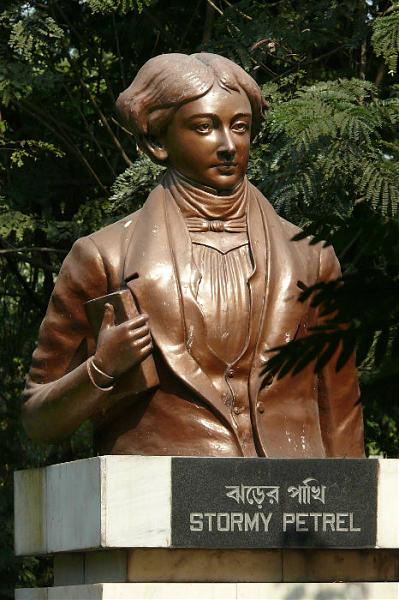
The first among the Indo-Anglican poets was Henry Louis Vivian Derozio (1809-1831). Curiously enough, Derozio was not an In­dian in the real sense of the term, for his father was a Portuguese and if he had inherited from his Indian mother a love of India and a strong patriotic fervor, he had also inherited
Indian Writing in English Poetry
from his father’s side an equally strong prejudice against Indian culture and Hinduism. At the age of only nineteen he became the professor of poetry in Hindu College (Today’s Presidency College).He is being regarded the father of Indo-Anglican sonnet. His sonnets, The Harp of India and To India- My native Land, are regarded as fine examples of India’s earliest nationalistic poetry. His long narrative poem, The Fakir of Jangheera, describing the ill-fated life and adventures of Brahmin widow, Nuleeni. Derozio’s poetry shows a strong influence of the English Romantics, notably Byron and Scott.  

Another pioneering Indo-Anglican poet was Kashiprasad Ghosh (1809-1873), who published Shair and Other Poems in 1830. The Shair relates the tragic story of a poet whose lady love dies and who, unable to bear the separation, throws himself into the sea. The poem is full of conventional description of nature and tedious moralizing.

Indian Writing in English Poetry
Michael Madhusudan Dutt
Michael Madhusudan Dutt was more original and more spontaneous than Kashi Prasad Ghosh. He was a passionate admirer of Byron and sent poems to Blackwood’s Magazine dedicating them to William Wordsworth.  Two longer pieces, The Captive Ladie and Vision of Past and some sonnets and lyrics form his only writing in English verse. The Captive Ladie deals with the story of Prithvi Raj, the most romantic figure in the Rajput history. Vision of the Past is a slight sketch in the blank verse. It describes the primeval innocence, the Temptation of Man and his Fall in the form of visions.

Romesh Chander Dutt, civilian and economist, translated the Ramayana and the Mahabharata into felicitous English verse. He also published his Lays of Ancient India in 1894.

Indian Writing in English Poetry
Toru Dutt
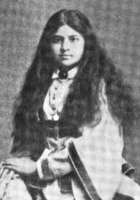
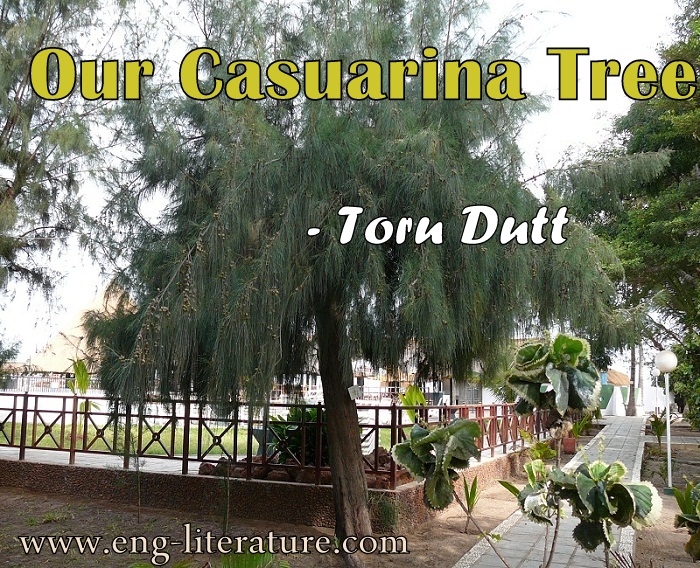
With Aru Dutt and Toru Dutt we reach the first truly significant chapter of fulfillment in the history of Indo- Anglican poetry. Both the precious sisters are gifted singers, but unfortunately fated to die an early death, when they were still hardly more than girls. Aru died in 1874 and Toru in 1877, aged twenty and twenty one respectively. The most significant aspect of Dutt's literary career was her use of the rich Indian heritage of myth and folklore. In Ancient Ballads she converted popular stories from the Ramayana, Mahabharata and the Puranas into English verse. In this, she pioneered a way for several later Indian writers in English who had similar problems regarding their poetic identity. The best of these, probably, one of the best individual compositions in Indian poetry in English is Our Casuarina Tree. This poem, reminiscent in both form and content of Keats' odes, is about memory, imagination and transcendence. The stories of Savitri and Sita, Dhruba and Prahlada, told so often before, are told again with new freshness and charm. Both Our Casuarina Tree and Baugmaree show Toru Dutta reaching a riper perfection. Edmund Gosse paid a glorious tribute to her when he wrote:
                                “When the history of English literature of our country comes to be written, there is sure to be a page in it, dedicated to his fragile exotic blossom of song.”

Manmohan Ghosh is unique among Indian writers of English verse. He buried himself in the study of classical European art and literature with the result that his poetry entirely Western in taste an allusion. During his lifetime just one collection of his poems, Love Songs and Elegies, was published in London by Elkin Mathews in the Shilling Garland series in 1898. He remained a dedicated poet and wrote a number of longer, more ambitious works including 'Perseus', 'The Gorgon Slayer', 'Nala and Damayanti', 'Orphic Mysteries', 'Immortal Eve' and 'Adam Alarmed in Paradise'.

Also Read:

Indian Writing in English Poetry
Sri Aurobindo Ghosh
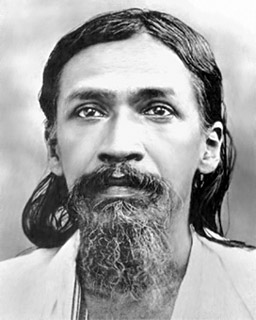
Manmohan’s younger brother Aurobindo Ghosh was more than a poet; he was a patriot, philosopher, and yogi rolled into one. Sri Aurobindo had a record of poetic achievement without a parallel in our day. Urvasie and Love and Death are nobly articulate narrative poems, while Baji Prabhou is a first- rate poem of action. The Rose of God, The Golden Light, and Thought the Paraclete are among the finest mystical poems. His supreme achievement was Savitri, a colossal epic running to about 20000 lines. In Savitri he used the story of Savitri's conquest of death in the Mahabharata - a story which has influenced Indians for centuries as an exposition of perfect womanhood - and expanded it to create his epic. A mystic and a seer, Aurobindo claimed to have described his own, palpable experiences in writing the poem.

Indian Writing in English Poetry
Rabindra Nath Tagore
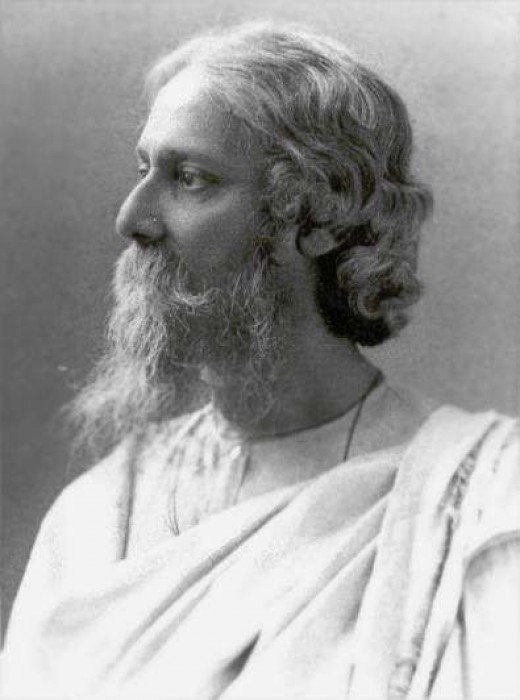
Rabindra Nath Tagore is regarded as the Titan among the Indian writers of English verse. Though strictly speaking, Tagore wrote only one poem, 'The Child' (1931), in English, his own English renderings of his famous poem, Gitanjali (Songs Offering) (1912) won him the Nobel Prize for literature in 1913 and world - wide renown. After that, Tagore continued to "translate" several of his works into English, deviating considerably from the Bengali in the process. Tagore bestrides the world of Indian culture like a colossus.

Indian Writing in English Poetry
Sarojini Naidu
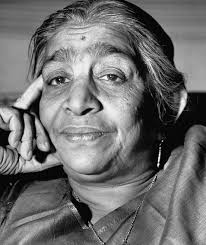
Sarojini Naidu (1879 - 1949), the Nightingale of India, is among the most popular and accessible of Indian poets in English. Naidu's poems are deliberately grounded in an anti - intellectual aesthetics of ephemeral beauty. She was primarily a lyric poet whose mastery of rhyme and meter is unmatched. Her poetical output contained in the volumes called The Golden Threshold (1905), The Bird of Time (1912), The Broken Wings (1917). These volumes are full of poignant feeling and picturesque Indian imagery. The chief quality of her poetry is melody - sound and sense combine to produce an emotion, as in music.

Harindranath Chattopadhyaya (1898 - 1989), brother of Sarojini Naidu showed great promise in his first collection, The Feast of Youth (1918). Both Tagore and Aurobindo were impressed by his talent. His another volumes are The Magic Tree, The Perfume of Earth, Grey Clouds and Coloured Garden etc.

Indian Writing in English Poetry
Kamala Das
There is no doubt that during the 1950's the dominant tone in Indian poetry in English shifted. The impact was swift and sweeping. What had been a minority voice suddenly became that of the majority. A ready made aesthetic was available to the new poets - the modernism of Eliot and Pound, of Richards and Leavis and of Picasso and jazz music. This aesthetic found rapid acceptance in the disillusionment of the post - independence era. Instead of ushering in the promised golden age, independent India became a typical third world country,
Indian Writing in English Poetry
backward, corrupt and hypocritical. The new generation which had come of age in the 1950's and 1960's found itself betrayed by its elders.


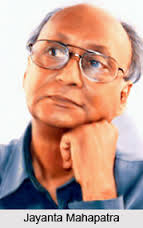
The major post - independence Indian English poets are : Nissim Ezekiel, Dom Moraes, P. Lal, Adil Jussawalla, A. K. Ramanujan, R. Parthasarthy, Gieve Patel, Arvind Mehrotra, Pritish Nandy, Kamala Das, K. N. Daruwalla, Shiv Kumar, Jayanta Mahapatra, Dilip Chitre, Saleem Peerdina, Santan Rodrigues, Eunice De Souza, Silgardo, Meena Alexander, Agha Shahid Ali, Vikram Seth, Manohar Shetty, Bibhu Padhi, Rukmini Bhaya Nair, Hoshang Merchant, Imtiaz Dharker, Jeet
Indian Writing in English Poetry
Arundhati Sudhramonium

Thayil, Makarand Paranjape, Rabindra K. Swain, Vijay Nambisan, Arundhati Subhramaniam, Anjum Hasan, Mamang Dai etc.


Moraes chooses Babur as a persona to suggest his own sense of alienation from India; Jusawalla finds himself filled with revulsion and pain upon Approaching Santa Cruz Airport, Bombay, in Kamala Das' The Sunshine Cat, An Introduction, the speaker castigates all the men who abused her, Ramanujan wonders if he is really himself in a characteristic self-reflexive "Self - Portrait". Mehrotra resorts to a surrealistic subversion of meaning in very discontinuous “Continuities”; Parthasarthy's Homecoming is loaded with self - criticism and loss; in Daruwalla's Routine the police officer
Indian Writing in English Poetry
Anjum Hasan

cynically prepares himself for another riot; Mahapatra's Dawn at Puri links the temple at Puri with crows and skulls' Chitre's speaker regards his Father returning Home with dispassionate and ironic detachment. Kolhatkar turns the whole idea of the traditional pilgrimage inside out in Jejuri. The publication of, in 1976, of Arvinda Krishna Mehrotra’s Nine Enclosures, Gieve Patel’s How Do You Withstand, Body, and Adil Jassawalla’s Missing Person by a Bombay Clearing House shows promise that high quality of Indo- English poetry is being produced still today.

The firmly rooted in their own cultural milieu and conscious of their poetic identity, the new Indian writers of English poetry delve into the myths, legends, superstitions and folklore of English poetry to express the contemporary social reality. Indian poetry in English is thus only occasionally poetry and only sometimes poetry. This leads to another strain of thought that - why must Indian poetry in English be always "Indian" to establish a nationality.  According to H.W. Longfellow “Nationality literature is good, but universality is better.”

It is always easy to tear a poem to pieces or deconstruct it but to understand a poem, or respond to it at several levels calls for approaches which are more constructive or creative and this should be the guiding principle of one’s approach to the study of Indian English poetry old or new.

Also Read:
~~~*~~~
Share:

Wednesday, 20 January 2016

Summary of Russell's Essay, Knowledge and Wisdom

Summary of Russell's Essay, "Knowledge and Wisdom"
Summary of Russell's Essay, Knowledge and Wisdom

"Never mistake knowledge for wisdom. One helps you make a living; the other helps you make a life.” - Sandra Carey

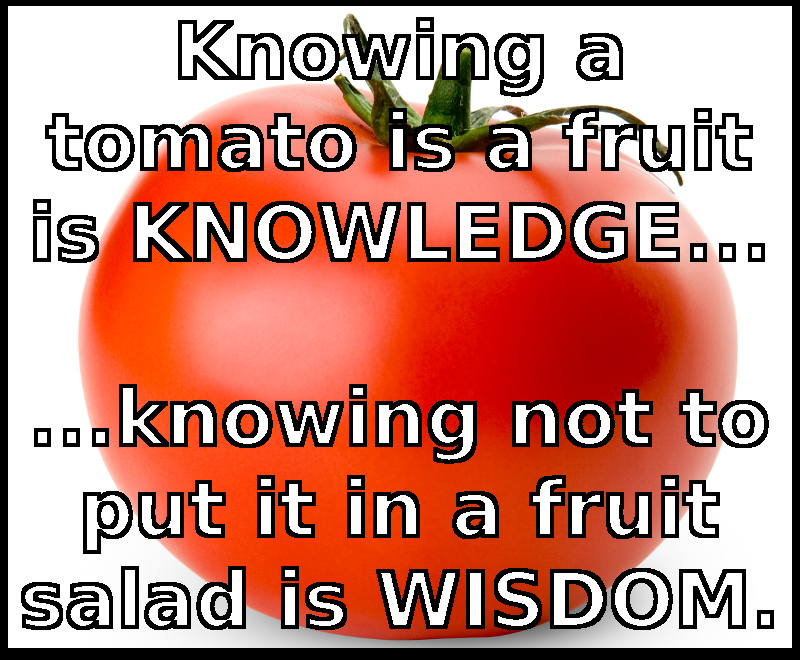
Knowledge and wisdom are different things. According to Russell, knowledge is defined as the acquisition of data and information, while wisdom is defined as the practical application and use of the knowledge to create value. Wisdom is gained through learning and practical experience, not just memorization.

A sense of proportion is very much necessary for wisdom. By inventing medicine, a scientist may reduce the infant death-rate. Apparently, it leads to population explosion and shortage of food. The standard of life comes down. If misused, knowledge of atom can lead human to destruction by manufacturing nuclear weapon.

Knowledge without wisdom can be harmful. Even complete knowledge is not enough. For example, Hegel wrote with great
knowledge about history, but made the Germans believe that they were a master race. It led to war. It is necessary, therefore to combine knowledge with feelings.

We need wisdom both in public and private life. We need wisdom to decide the goal of our life. We need it to free ourselves from personal prejudices. Wisdom is needed to avoid dislike for one another. Two persons may remain enemies because of their prejudice. If they can be told that we all have flaws then they may become friends.

So, ‘Hate Hatred’ should be our slogan. Wisdom lies in freeing ourselves from the control of our sense organs. Our ego develops through our senses. We cannot be free from the sense of sight, sound and touch. We know the world primarily through our senses. As we grow we discover that there are other things also. We start recognizing them. Thus we give up thinking of ourselves alone. We start thinking of other people and grow wiser. We give up on our ego. Wisdom comes when we start loving others.

Russell feels that wisdom can be taught as a goal of education. Even though we are born unwise which we cannot help, we can cultivate wisdom. Queen Elizabeth I, Henry IV and Abraham Lincoln, are some impressive personalities who fused vigour with wisdom and fought the evil.
                ~~~~~*~~~~~  
Share:

Monday, 30 November 2015

Charles Lamb's Essay, "The Superannuated Man" : A Complete Summary

Charles Lamb's Essay, "The Superannuated Man" : A Complete Summary


Who is 'Superannuated Man'?

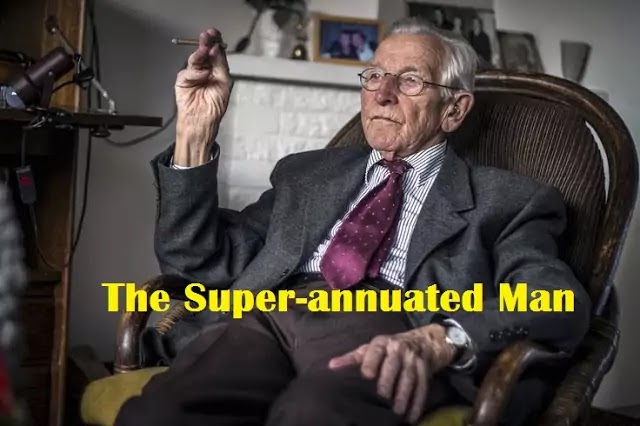
A superannuated man is one who has declared too old to work by the company and hence forcibly retired from service.


According to Albert, ‘no essayist is more egotistical than Lamb; but no egotist can be so artless and yet so artful, so tearful and yet so mirthful, pedantic and yet so human.’ His “Essays of Elia” expresses freely his whimsical personality and humour, his love of London and of the antique an peculiar in literature, in furniture, books and customs.

 ‘The Superannuated Man’ is an account of Lamb’s lament of his life’s travails from his school days to the job in Counting House in Mincing-lane in London. He took up the job at fourteen and languished there for ‘six and thirty’ years leading up to his retirement. The care-free, fun-filled school days were gone forever. At his desk in the firm, his life was mired by boredom and tediousness. The working hours often dragged on from eight to nine to ten hours. In the confines of the office, Lamb’s soul and vitally weathered inflicting pain that he could not endure. Yet he had to submit to the oppressive rigour of his office just as a jungle animal submits to its life in a cage till it becomes subdued and emasculated. Eagerly did he await the Sunday for a respite from his colourless monotonous work.


Lamb had Sundays to himself. It gave him respite from the office, but the day was insufferably lifeless. The entire city of London slept on Sundays. There was not a trace of the hustle and bustle, the colour and fun, the glitter and cheer of London’s streets. The book shops, the restaurants and the shops bursting with their wares were all shut. Thus, the Sundays, too, failed to lift his spirits.
Charles Lamb's Essay, "The Superannuated Man" : A Complete Summary
Charles Lamb


Besides Sundays, Lamb loved the Easter and the Christmas holidays that allowed him to escape to his native place Hertfordshire where he indulged in his simple pleasures in gay abandon. This escape from his dreary office to his home’s rejuvenating environment helped him to banish his woes and recharge himself for another year of monotony and boredom.


But the much-awaited seven days’ holidays came and went too fast. Before he could plan how to make the best use of it, it vanished. Another year of servitude to the dreadful job awaited him after this fleeting year-end holiday ended.

The speaker was a miserable worker at the office. He detested the rigidity, inhumane and stifling environment pervasive in his work place. His mood often swung to extreme frustration. Enduring the relentless pain, both his mind and body shimmered in discontent. The anguish loomed large on his face. Slowly it debilitated his body. His self confidence deserted him. Fear of failure gripped his inner self. Slowly, the fear crept into his bed room. In the darkness of night, he wondered if he had made any mistake in the many entries and the number juggling he did during the course of his work in the office. He reached 50, with no hope of freedom from the stranglehold of his dreadful work.

The speaker’s colleagues, puzzled at his pallid face and sagging spirit would inquire about his well being. Perhaps, his discomfiture in the work place had been taken note of by his employers, he feared. That lurking anxiety was very unsettling.

One day Mr. L—, a junior partner of the firm, called him to his side and very kindly asked him the reason of his torment. Confronted with such a searching question, he admitted that he was finding it hard to cope up with the work pressure. Even he went to the extent of saying that he might have to leave his job soon. Mr. L — comforted him with some kind words. The matter stopped there.

For a whole week after this encounter, the speaker regretted his indiscretion. He thought he should not have divulged his inadequacies. Some nervous times passed. On 12th April, a very tense moment arrived when he was asked to stay back after the office hours. He knew the doomsday had finally arrived and his dismissal from job was imminent. With fear pounding his heart, he tiptoed to the back parlour where the entire top management of the firm had assembled.

On facing the team, he could see a small smile in Mr. L—’s face. Then Mr. B—, the senior-most partner began his long speech narrating how he had served the firm so long and with such aplomb. Mr. B- told it was time for him to call it a day. Bewilderment and fear made his blood race through his veins. He braced himself for the worst crisis to explode. Then, Mr. B — made some brief inquiries about his wealth and property. Finally, he declared that the firm would retire him soon, and give him a pension equivalent to two third of his salary! Other members assented with a mechanical nod.

Lamb was overwhelmed with a deep sense of gratitude, joy, and relief. With his brain in a tizzy, he told them to treat that day as his final and thanking them profusely, walked home. For a moment he thought his company — the house of Boldero, Merryweather, Bosanquet, and Lacy - was the most caring company on earth.

Lamb was in cloud 9. A ceaseless torrent of happiness raced through his mind. It took a long time for the just-retired (or just-freed) employee to let the joy sink in. For a while, he felt disoriented like the Bastille prisoner let free after four decades.

He knew he would have all his time to himself. It felt as if he had entered the realm of Eternity. His elation knew no bounds. He felt he was a man of great wealth whose property was to be managed by a full-time manager.  A mix of hallucinatory euphoria swept through his mind.

Slowly and steadily, he got used to his new life with no job, no rigid routine, no fear, and no worries. He felt truly contented. When he felt he had too much time to spare, long walks, one of his favorite pastimes provided him the escape from boredom.

The speaker also took to reading leisurely, selectively and joyfully. There was no need to pour over books straining eyes in dim candle light. Life thus began to fall in to an easy pace.

When the speaker reminisced about the fifty years of past life gone by, he realized he had devoted a lion’s share of his time for the service of others. Now, he would have all his time for himself. Thus, if he managed to live ten more years, that would be equivalent to thirty years of his past life. Often, he felt he had retired long long back. The memory of his bosses and the colleagues at the Counting House faded from his mind quite fast.


He visited his old colleagues in the office, and was received with a lot of warmth, bonhomie and banter. It made him to wonder why he had dreaded his desk so much when he was in service. Now, the environment appeared not the least unfriendly or oppressive.

He bid good bye to his friends promising to come again, and imploring them to do their work diligently.

He returned home to his restful and carefree life. He wandered around as he pleased, did what he liked, and lived the way that pleased him most. At times, he was in the Bond Street at 11 in the morning. He often dropped into Soho - his favourite bookshop.

For him, time stretched endlessly. He felt as if it was thirty years since he retired. He thought about Fish-street Hill, Fenchurch-street, and the Stones of old Mincing-lane, which he had visited umpteen times in the thirty six years of his service.

Deep in his heart, he felt as if time was flying past as he visited the Elgin Marbles. Was he passing to another world, he wondered. His mind experienced contrasting feelings. At times, it appeared life had become so uneventful. Time appeared to stand still. He lost track of the calendar. The yearning for the Sunday was not there. Nor did he experience the typical mid-week feeling on Wednesday. Saturday nights had lost their characteristics. Now all days of the week appeared equal with no torment, no anxiety and no worries.

Now, the author could visit the church on Sundays without worrying about the scarce time being lost. He could visit a sick friend. He could pay an unannounced visit to a very busy person. He could tease him to join a pleasure visit to Winsor in the morning. He could even indulge in some social welfare work for the poor. He felt he was making the best of the ample leisure time at his disposal. The time was being well spent with no sense of boredom or guilt or laziness. He hated the factories and the offices that made life so insufferable with monotonous work.

At the end, he sang the praise of his post-retirement life declaring how contented he was to have lived his life to its full. No regrets.
~~~~~*~~~~~

Share:

Follow Me in Social Media

Get Free Updates

Tags

A Doll's House (1) A Renouncing of Love (1) Absurd Drama (2) African English Literature (2) Agyeya (1) Alexander Pope (7) American Literature (26) Amitav Ghosh (3) Analyses (22) Anglo-Saxon Period (1) Aravind Adiga (1) Arthur Miller (5) Australian Literature (2) Beowulf (3) Bertrand Russell (2) Bible (1) Biographies (12) Book Review (2) British Literature (106) Broad Notes (94) Character Analysis (2) Charles Dickens (1) Charles Lamb (2) Charlotte Bronte (2) Chetan Bhagat (2) Chinua Achebe (1) Christopher Marlowe (2) Classical Literature (2) Composition (4) Creative Writing (5) D. H. Lawrence (1) Daniel Defoe (1) Diaspora (4) Drama (1) Dream Children: A Reverie (1) E-book Download (12) Edmund Spenser (1) Edward Fitzgerald (1) Edward II (3) Elizabethan Era (2) English Language (15) English Literature (9) English Literature Quiz (8) Escapism (1) Essay (12) Essays (12) Eugene O'Neill (7) Explanations (3) Feminism (3) Francis Bacon (4) Frankenstein (4) Free E-book Download (5) Free PDF Download (4) Genre (1) Geoffrey Chaucer (1) George Eliot (4) George Herbert (1) George Orwell (1) Girish Karnad (1) Hard Times (1) Heart of Darkness (1) Henrik Ibsen (1) Henry Vaughan (2) Historical Novel (6) History of English Literature (22) Indian Drama (2) Indian English Poetry (1) Indian Fiction (3) Indian Writing in English (33) Indo-Anglican Literature (32) Interesting Facts (9) Interpreter of Maladies (2) Jane Austen (2) Jane Eyre (2) Jayanta Mahapatra (2) Jhumpa Lahiri (3) John Donne (5) John Dryden (1) John Keats (4) Joseph Addison (1) Joseph Conrad (1) Keki N. Daruwalla (1) Kenilworth (3) Kim (1) Knowledge and Wisdom (1) Leo Tolstoy (1) Linguistics (2) Literary Criticism (5) Literary Essay (9) Literary Facts (1) Literary MCQ (4) Literary Photo Album (1) Literary Terms (14) Literary Trends (1) Literary Types (7) Lord of the Flies (1) Lyric (1) M. K. Anand (2) Mac Flecknoe (1) Macbeth (7) Mahadevi Verma (2) Man Eater of Malgudi (2) Mark Twain (1) Mary Shelley (4) Mathew Arnold (1) Midnight's Children (1) Modern Poetry (3) Modernism (1) Motivational Short Story (21) My Penning (1) Nayantara Sahgal (1) Notes (25) Novel (60) Novels (5) O' Henry (1) Ode to a Nightingale (1) Ode to the West Wind (1) Oedipus Rex. Oedipus the King (2) Of Friendship (1) On Fame (1) Online Quiz (8) Othello (1) P B Shelley (1) P. B. Shelley (1) Paulo Coelho (2) Philological Notes (10) Phonetics (3) Picaresque Novel (5) Plays (41) Poetry (52) Popular Literature (1) Post Colonial Literature (1) Post Colonialism (1) Pride and Prejudice (2) Prosody (3) Quiz (6) Quotations (6) R. K. Narayan (2) Rabindranath Tagore (2) Random Quiz (6) Rape of the Lock (5) Realistic Fiction (1) Restoration Era (2) Rhetoric (2) Robert Browning (1) Robinson Crusoe (1) Romantic Poetry (2) Romanticism (2) Rubaiyat of Omar Khayyam (1) Rudyard Kipling (1) Salman Rushdie (2) Samuel Beckett (3) Sarojini Naidu (1) Seven Ages of Man (1) Shakespearean Influence (2) Shakespearean Plays (11) Shakespearean Sonnets (4) Sheridan (4) Short Notes (10) Short Stories (9) Soliloquy (1) Songs of Innocence (1) Sons and Lovers (1) Sophocles (1) Sri Aurobindo (1) Substance Writing (1) Summary (8) Sylvia Plath (1) T. S. Eliot (2) Texts (10) The Adventure of Tom Sawyer (1) The Alchemist (1) The Crucible (3) The Emperor Jones (7) The Golden Light (2) The Guide (1) The Mill on the Floss (4) The Namesake (1) The Pulley (2) The Rivals (5) The Shadow Lines (3) The Sunne Rising (5) The Superannuated Man (1) The Town Week (1) The White Tiger (1) The Winter's Tale (2) Things Fall Apart (1) Thomas Hardy (2) Thomas Wyatt (1) Toni Morrison (6) Tragedy (3) Tughlaq (1) Untouchable (2) Waiting for Godot (2) Walter Scott (3) Way of the World (1) William Blake (2) William Golding (1) William Shakespeare (14) William Wordsworth (3) Word Notes & Annotations (1) Word Notes & Anotations (2)

Blog Archive