
All About English Literature: Man Eater of Malgudi

For Exclusive Notes and Analysis

Showing posts with label Man Eater of Malgudi. Show all posts

Monday, 21 October 2019

Narayan's "Man Eater of Malgudi" as a Picaresque Novel. or Character Portrait of Vasu in "Man Eater of Malgudi"

Narayan's "Man Eater of Malgudi" as a Picaresque Novel. or Character Portrait of Vasu in "Man Eater of Malgudi"


A picaresque novel deals with the adventures of a rogue or villain. Narayan’s Man Eater of Malgudi has almost all the spices to be a picaresque novel surrounded by the picaro man, Vasu. He has been shown as an adventurous and mysterious wanderer. He pretends to be a person of dual personality. Vasu, the prototype of Bhasmasur wishes the illusion of becoming omnipotent. The placid world of Malgudi is beset with his deeds.

Vasu like Iago in Shakespeare’s Othello, Healthcliffe in Emile Bronte’s Withering Heights, Voss in Patrick White’s Voss “is the prince of darkness and in darkness his activities are to be conducted”. He has been called ‘man-eater’, ‘terrifying’, ‘unreasonable’, ‘man with the dark halo’, ‘cruel’, ‘rakshasha’, ‘arrogant by implication’ and one who laughs ‘diabolically’. Vasu, the person with hammer-fist, is farther attributed as wild animal hunter and a taxidermist.

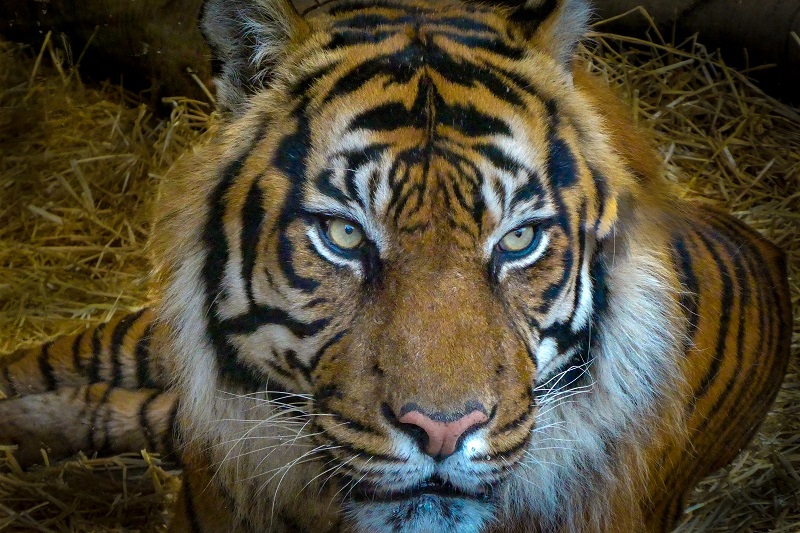
Literally Vasu is not a man eater as he does not eat the flesh of persons. Being a secluded individual, he rather by constantly troubling and terrorizing the human beings with his demonic strength sucks their peace of mind. He blasts bullies, aggres­sions and hectors. He beats down the huge strong ‘phaelwah’. His Herculean strength makes him prepare to knock the tiger down with his hands and ram the built of his rifle between his jaws if it comes to that when Sen, the poet, Muthu and Dr. Joshi visit his attic to ask not to shoot kumar. He threatens them to pick up and toss them down the stairs. He forcibly snatches the green folder and the list of the donors from Natraj and collects the money from the Malgudians by threatening, keep the money for his own use. Vasu not only kills animals but kills the name and fame of Natraj; “he had destroyed my name, my friendship, and my world”. Vasu’s presence horrifies and fascinates Nataraj.

Vasu is an intellectual giant who gets his M.A in economics, History and English from the Presidency College Madras. He knows laws, talks of Vedanta, of the transmigration of soul and the omnipresence of God. Even Natraj admires vasu - “He worked single handed on all branches of his work. I admired him for it”. The pseudo-philosophy of self-willed and assertive Vasu is revealed in his speech “we are civilized human beings, educated and cultured and it is up to us to prove our superiority to nature. Science conquers nature in a new way every day; why not in creation also? That’s my philosophy, Sir.”  

 Being a dissolute womanizer when he can no longer hunt the jungle animals he takes to indulging in sex. His passion for hunting is transformed into the passion for lascivious lust. He likes to enjoy the inordinate immoral company of as many loose women as possible. That is why he is very much against the institute of marriage. He wants to stick to the Mephistophelian concept of enjoying sex. He freely satisfies his sexual desire with the excessively passionate Rangi and other prostitutes of the town.

Vasu is open- hearted, vivacious and sometimes appears kind hearted too. If he takes Natraj to the Mempi village it is not for any harm but out of his high spirits and playfulness. If Natraj fears that Vasu has kidnapped him, it is Natraj’s nothing but false fear. When Natraj visits the Mempi village and the axle of the bus is broken it is vasu who takes him to Malgudi in his jeep. Rangi praises him as brave and courageous. He fears no one on earth or in heaven. These abilities of Vasu show that though he has some weakness, he cannot be called as man eater.

H. M. Williams in his Indo-Anglian Literature observes Vasu as a mighty force which can hardly be controlled. He is to him, a mighty avalanche or a tempest. Williams believes that Vasu who is a revolutionary force, despises in his utter haughtiness and will, all that is established. He regards Vasu as the embodiment of will. Vasu’s greatest contribution for the Malgudians is that he exposes all the absurdities of Natraj and his friends. Vasu is certainly not Bhasmasur who brings doom on himself. However few critics opine the satanic traits in Vasu. Meenakshi Mukherjee in her book The Twice Born Fiction says: The Man-Eater of Malgudi resorts to the Puranic conflict between Sura and Asura.” K. R. Srinivasa Iyengar too in his Indian Writing in English finds in the Man-Eater an absolute evil- “anti-life, anti-nature, anti-faith.” This theme is implicit in R. K. Narayan himself who cites Vasu as the modern version of a Rakshasa.  

Even though, the death of Vasu is based on the mythology, the death of Vasu due to the mosquitoes- smashing- hands is not convincing. His death cannot be accepted by reason and logic. No one has ever been killed in this way. The death of Vasu is a matter of improbable probability. Vasu is not such vicious as he being projected by other characters; even such a man simply happens as Raju in The Guide. Therefore it is not always convincing to agree with some critics who observe that the man eater of Malgudi is a giant of man, a potent, dangerous bully, a wild threat to the norms of society. What we can only say that Vasu is the dark domain of ours. Crises, catastrophe and resolution of the novel is the outcome of picaro.

~~~~~*~~~~~
Share:

R. K. Narayan's "The Man Eater of Malgudi" is an Allegory of Good and Evil. Discuss. or Theme of Love-Hate Relationship. or What is the moral or central idea of the novel?

R. K. Narayan's "The Man Eater of Malgudi" is an Allegory of Good and Evil. Discuss. or Theme of Love-Hate Relationship. or What is the moral or central idea of the novel?
Narayan holds a distinct position in the realm of Anglo-Indian literature. In Man Eater of Malgudi, he depicts the canvas without sounding preachy or cynical. The quiet landscape of Malgudi provides a suitable background for his fiction. Malgudi is a microcosm, this is a world within a world. Meenakshi Mukherjee in her book The Twice Born Fiction says: “The Man-Eater of Malgudi” resorts to the Puranic conflict between Sura and Asura.” K. R. Srinivasa Iyengar too in his Indian Writing in English finds in the Man-Eater an absolute evil- “anti-life, anti-nature, anti-faith.”
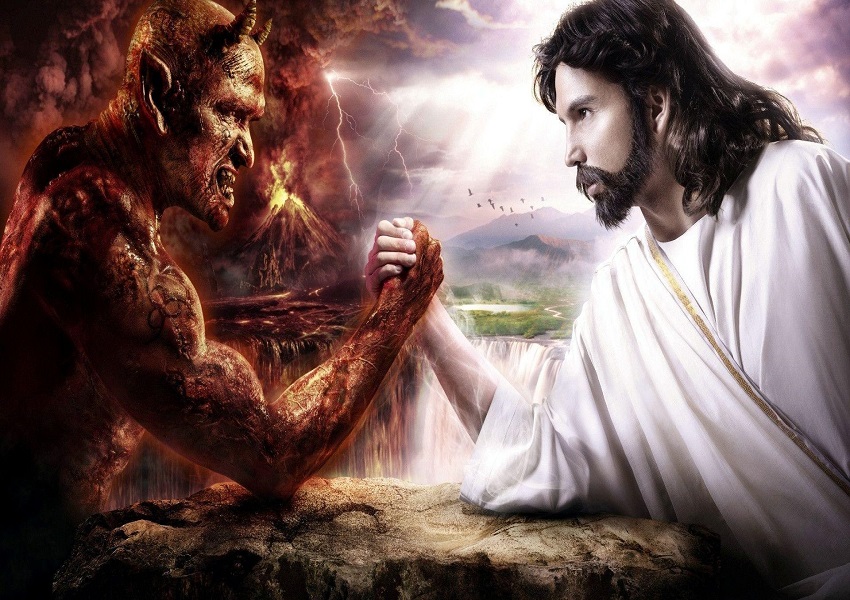
                                                                                                                                           The Man-Eater of Malgudi is an allegory of good and evil. The good is represented by Natraj; on the other hand, Vasu is an embodiment of evil. Edwin Gerow, a perceptive analyst of the novel, has pointed out How closely the novel follows the allegorical pattern of Sanskrit literature.”

The Man-eater of Malgudi has a parallel development to an ancient myth projecting a clash between good and evil. The innocent world of Malgudi with her people and surroundings live poles apart from the attic of the press. Natraj and Vasu are symbols of two different sides of life. They represent virtue and vice in their true form respectively. Natraj is too meek to say 'no' to anybody. In the company of Sen, Sastri and the Poet, he leads his life in the press with nothing much to worry about the world. The life around Malgudi and far-off Mempi forest run on its orbit. Taking little care of the outer world they live at peace with themselves. They are true to their environment, their God and their own selves. The appearance of Vasu rejects the order and crunches the innocence and purity of Malgudi. He is a danger to the very existence of life there. Vasu is a taxidermist and he rejoices in the killing. The sportive fauna of the forest became the target of his bullets. He stuffs the dead body and sells them for money.

He is the prince with dark halo. Nothing can survive within his reach. Nature loses its rhythm but finds no way to get rid of this mighty demon. Gifted with immense strength, Vasu bullies and frightens. The whole lot seems to be spineless before the demonic creature. The smoldering anger cannot change into a blaze and Malgudi continues to breathe in-state air coming from dead life. Natraj along with his company imagines of protesting against his ways and wishes.  But these are plans not to be translated into action. They pin their faith in the supremacy of goodness and it is the last hope for them.

On a religious ceremony of Radha-Krishna, Vasu is determined to shoot the temple elephant dead. Keeping aside her loyalty to Vasu, the public woman, Rangi informs Natraj about the heinous scheme of Vasu which turns the festive mood of Malgudi into gloom. In their own ways, some people try to mitigate the Rakshasa or destroy him. All efforts go in vain. The classical myth tells of Bhasmasur destroying himself while dancing at the dictated posture of Mohini. In the similar manner the terrible demon, Vasu struck himself with his hammer-fist in the course of keeping away the flies. The dreadful blow brought his catastrophe.

Natraj and Vasu are contradictory characters. Natraj, no doubt, is the central figure and the action of the novel is viewed through his eyes. It is his point of view that we always get. But he is an unheroic hero, good at heart, but passive and inactive. According to Paul Verghese, “We can compare the good and evil in terms of Vasu and Natraj love hate relationship who show the opposition “between Satva and Rajas”. Vasu is a Faustian character with his virtually insatiable curiosity and thirst for power and knowledge. He holds his master’s degree in history, economics and literature. Natraj, on the other hand is a typical Narayan’s character with non-committal neutrality as his ideal.

The Man-Eater of Malgudi restores normalcy at the end of the novel. The end of Vasu is a poetic justice. In fact, Narayan's novel is a pensive comedy where darkness cannot reign forever. Sunshine has to follow the black shadow of evil. The story is also a moral indicator of the absolute fall of the vanity of power. 

~~~~~*~~~~~
Share:

Follow Me in Social Media

Get Free Updates

Tags

A Doll's House (1) A Renouncing of Love (1) Absurd Drama (2) African English Literature (2) Agyeya (1) Alexander Pope (7) American Literature (26) Amitav Ghosh (3) Analyses (22) Anglo-Saxon Period (1) Aravind Adiga (1) Arthur Miller (5) Australian Literature (2) Beowulf (3) Bertrand Russell (2) Bible (1) Biographies (12) Book Review (2) British Literature (106) Broad Notes (94) Character Analysis (2) Charles Dickens (1) Charles Lamb (2) Charlotte Bronte (2) Chetan Bhagat (2) Chinua Achebe (1) Christopher Marlowe (2) Classical Literature (2) Composition (4) Creative Writing (5) D. H. Lawrence (1) Daniel Defoe (1) Diaspora (4) Drama (1) Dream Children: A Reverie (1) E-book Download (12) Edmund Spenser (1) Edward Fitzgerald (1) Edward II (3) Elizabethan Era (2) English Language (15) English Literature (9) English Literature Quiz (8) Escapism (1) Essay (12) Essays (12) Eugene O'Neill (7) Explanations (3) Feminism (3) Francis Bacon (4) Frankenstein (4) Free E-book Download (5) Free PDF Download (4) Genre (1) Geoffrey Chaucer (1) George Eliot (4) George Herbert (1) George Orwell (1) Girish Karnad (1) Hard Times (1) Heart of Darkness (1) Henrik Ibsen (1) Henry Vaughan (2) Historical Novel (6) History of English Literature (22) Indian Drama (2) Indian English Poetry (1) Indian Fiction (3) Indian Writing in English (33) Indo-Anglican Literature (32) Interesting Facts (9) Interpreter of Maladies (2) Jane Austen (2) Jane Eyre (2) Jayanta Mahapatra (2) Jhumpa Lahiri (3) John Donne (5) John Dryden (1) John Keats (4) Joseph Addison (1) Joseph Conrad (1) Keki N. Daruwalla (1) Kenilworth (3) Kim (1) Knowledge and Wisdom (1) Leo Tolstoy (1) Linguistics (2) Literary Criticism (5) Literary Essay (9) Literary Facts (1) Literary MCQ (4) Literary Photo Album (1) Literary Terms (14) Literary Trends (1) Literary Types (7) Lord of the Flies (1) Lyric (1) M. K. Anand (2) Mac Flecknoe (1) Macbeth (7) Mahadevi Verma (2) Man Eater of Malgudi (2) Mark Twain (1) Mary Shelley (4) Mathew Arnold (1) Midnight's Children (1) Modern Poetry (3) Modernism (1) Motivational Short Story (21) My Penning (1) Nayantara Sahgal (1) Notes (25) Novel (60) Novels (5) O' Henry (1) Ode to a Nightingale (1) Ode to the West Wind (1) Oedipus Rex. Oedipus the King (2) Of Friendship (1) On Fame (1) Online Quiz (8) Othello (1) P B Shelley (1) P. B. Shelley (1) Paulo Coelho (2) Philological Notes (10) Phonetics (3) Picaresque Novel (5) Plays (41) Poetry (52) Popular Literature (1) Post Colonial Literature (1) Post Colonialism (1) Pride and Prejudice (2) Prosody (3) Quiz (6) Quotations (6) R. K. Narayan (2) Rabindranath Tagore (2) Random Quiz (6) Rape of the Lock (5) Realistic Fiction (1) Restoration Era (2) Rhetoric (2) Robert Browning (1) Robinson Crusoe (1) Romantic Poetry (2) Romanticism (2) Rubaiyat of Omar Khayyam (1) Rudyard Kipling (1) Salman Rushdie (2) Samuel Beckett (3) Sarojini Naidu (1) Seven Ages of Man (1) Shakespearean Influence (2) Shakespearean Plays (11) Shakespearean Sonnets (4) Sheridan (4) Short Notes (10) Short Stories (9) Soliloquy (1) Songs of Innocence (1) Sons and Lovers (1) Sophocles (1) Sri Aurobindo (1) Substance Writing (1) Summary (8) Sylvia Plath (1) T. S. Eliot (2) Texts (10) The Adventure of Tom Sawyer (1) The Alchemist (1) The Crucible (3) The Emperor Jones (7) The Golden Light (2) The Guide (1) The Mill on the Floss (4) The Namesake (1) The Pulley (2) The Rivals (5) The Shadow Lines (3) The Sunne Rising (5) The Superannuated Man (1) The Town Week (1) The White Tiger (1) The Winter's Tale (2) Things Fall Apart (1) Thomas Hardy (2) Thomas Wyatt (1) Toni Morrison (6) Tragedy (3) Tughlaq (1) Untouchable (2) Waiting for Godot (2) Walter Scott (3) Way of the World (1) William Blake (2) William Golding (1) William Shakespeare (14) William Wordsworth (3) Word Notes & Annotations (1) Word Notes & Anotations (2)

Blog Archive