All About English Literature: Indian Drama

For Exclusive Notes and Analysis

Showing posts with label Indian Drama. Show all posts

Wednesday, 15 April 2020

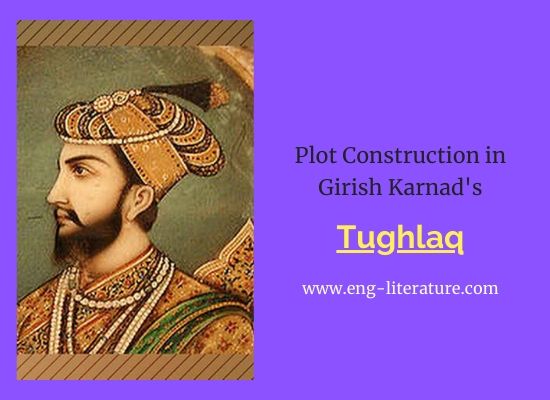
Plot Construction in Girish Karnad's Play "Tughlaq"

Plot-Construction-Girish-Karnad-Tughlaq

Girish Karnad’s Tughlaq deals with the last five years of the reign of Muhammad -Bin-Tughlaq. The playwright has crafted and well-handled plot with superb-craftsmanship. This has been done in the interest of dramatic effectiveness, and in the finest tradition of Greek tragedies. But the three unities of time, place and action have been flouted. The action of the play takes place first of all in Delhi in the year 1327, then on the road from Delhi to Daulatabad and lastly in and around the fort at Daulatabad five years later.

The unity of action implies that all the episodes in the play must be knit together to form a whole. Not a single episode or incident may be removed from the structure without a loss. In Tughlaq there are many superfluous incidents. The episode of Aziz and the Hindu woman with a sick child, and also of Aziz and the man and woman with six illegal children can be removed from the play without any loss of interest Karnad has also added a sub plot to the play. It provides dramatic relief in the manner of the tragedies of Shakespeare, but the tragic-effect is no way weakened by it. Indeed, Tughlaq is a tragedy of intrigue. There are a number of murders both reported and actually done on the stage. It would have been too horrible and unbearable without the dramatic relief provided by the sub-plot.

Both incident and situation are correlated with characters. Events and incidents which originate from the paradoxical actions of the protagonist, Tughlaq and his opponents have been organised into an artistic whole. The devices of parallelism and contrast have been vividly employed. The plot is based on opposites and paradoxes, intrigues, coherently brought under the discipline of art, form its main basis.

1.R, Anantha Murthy Says: "Both Tughlaq and his enemies initially appear to be idealists; yet, in the pursuit of the ideal, they perpetrate its opposite. The whole play is structured on these opposites the ideal and real, the divine aspiration and the deft intrigue." The dramatist introduces tension and conflict, which are essential for plot in the very beginning and all events and actions of characters intensify conflict until it reaches the climax.

Also Read My Articles on:

 ·         Journey of Indian English Drama


The orthodox Muslims are annoyed by Tughlaq's idealism, humanism and departure from the practice of the religious tenets in administrative matters. The old man who represents the orthodox segment of Muslim society, introduces the note of dramatic conflict with his words: "God, what's the country coming to." The Young man supports Tughlaq and says that the country is in perfectly safe hands. It is evident that this is a conflict between the old and new, between orthodox religion and modernity which are embodied in Tughlaq and his orthodox opponents. As the plot advances the conflict develops.

The Sultan who is a curious mixture of the ideal and the obnoxious has an intriguing nature. He sends his major opponent Sheikh Imam-uddin as a royal envoy to rebellious Ain-ul-Mulk. The Sheikh is treacherously killed. This malicious and barbarous misdeed perpetrated by Tughlaq intensifies the conflict with the rebellion of Amirs, Sheikhs and Sayyids who hatch a conspiracy under the leadership of Shihab-uddin to murder Tughlaq at prayer time. Ratan Singh who masterminds this conspiracy clandestinely informs the Sultan about it. He takes all precautions, arrests Amirs, etc. and inhumanly kills Shihab-ud-din.

Rebellions become quite common and consequently Tughlaq becomes revengeful, disappointed and frustrated. The capital is shifted from Delhi to Daulatabad hurling death and disaster on countless people. The Sultan's step-mother gets Najib, who is considered Tughlaq's evil genius, killed. He sentences her to death. The conflict reaches the climax. Tughlaq's viciousness increases but with every crime and murder he becomes more disillusioned and frustrated. The play ends when Tughlaq is tethering on the brink of madness and cannot offer prayer to which he attaches great importance. The denouement lacks in tragic intensity and depth. M.K. Naik says: "However, Tughlaq fails to emerge as a tragedy chiefly because the dramatist seems to deny himself the artist's privilege to present an integrated vision of a character full of conflicting tendencies."

Prayer has been used as the leitmotiv in Tughlaq. Tughlaq killed his father at prayer time. The Muslim Amirs, Sheikhs, etc. conspire to murder Tughlaq at prayer time. In the beginning Tughlaq is very particular about prayer. Everyone has to pray five times a day because that is the law. When he is at the height of frustration he bans prayer in his kingdom and when it is reintroduced after an interval of five years on the arrival of Ghiyas-ud-din Abbasid he sleeps soundly. Both Tughlaq and his opponents use prayer as a political strategy. U.R. Anantha Murthy rightly says: "That prayer, which is most dear to Tughlaq is vitiated by him as well as his enemies, is symbolic of the fact that his life is corrupted at its very source. The whole episode is ironic."

The sub-plot related with Aziz and Aazam runs parallel to the main plot. It is employed for the purpose of burlesque. In other words, it is introduced in the way of ridicule. Such, burlesque-parallelism is a singular feature of the plot of Shakespeare's plays as also of Tughlaq. Aziz who assumes various disguises from start to finish is a wily time server who is not punished for his misdeeds but is rewarded by the Sultan. The under plot is characterized by suspense and surprise.

The play was deliberately written in the convention of the Company Natak. At least the attempt was there. In a Company Natak what used to happen, all scenes were divided and alternated between deep scenes and shallow scenes. The shallow scene was usually a street scene and was kept for comedy. While the shallow scene was on, the deep scene was prepared, for a garden a palace, a dance, whenever the sets were being changed.

There are five comic scenes which take place in the bazaars and in the crowds. However, the sixth scene takes place in the palace. Though a comic scene, it is highly ironic, and the irony lies in the fact that Aziz who claims to be the best follower of the Sultan who has faithfully carried out his policies over the years and who has also murdered Ghiyas-ud-din Abbasid, is not punished, but is actually rewarded. He is sent as an important officer to Deccan, from there he has to go to Arabia, and then disappear on the way. All this is a caricature of the main or serious plot of the play.

In the end, there is chaos in the far flung empire of Tughlaq. There is drought and famine, people are starving and dying in their thousands. If they murmur or grumble they are brutally slaughtered. There is revolt all around and the rebels from different directions are marching on the capital. And confusion is made worse confounded when Tughlaq orders the people to return to Delhi, the original capital. This external chaos well reflects the spiritual chaos in the Sultan. He is unable to sleep or to pray. As he says to Barani towards the end of the play, "I was trying to pray-but I could only find words learnt by rote which left no echo in the heart. I am tethering on the brink of madness, Barani, but the madness of God still eludes me. (Shouting) And why should I deserve that madness? I have condemned my mother to death and I'm not even sure that she was guilty of the crime...."

Also Read My Articles on:
 ·         Journey of Indian English Drama

~~~~~*~~~~~


Share:

Sunday, 27 October 2019

Journey of Indian English Drama


Intro:

Drama is a composite art form. It is mimetic like all other performing arts in literature. It imitates life, particularly reflecting the three unities of time, place and action. “It is designed for representation on the stage by actors who act the parts of the characters of its story, and among whom the narrative and the dialogue are distributed.”

India has a long and fertile history in Drama, starting from Sanskrit plays of Vedic Age. Dramatists of Indian Writing in English have scaled the length and breadth of the experimentation in dramaturgy of India during and after independence. To fathom the depths of Indian Drama in English certain characteristic features are to be kept in mind. Basically, the Indian Writings in English during Modern Age articulate the budding and the already present writers as well as the influence of Existentialism, Globalisation, Surrealism, Dadaism, Magic Realism and the Post Colonial issues. India had been under the colonial shackles for a time period of three hundred years and as a matter of fact the colonial language and culture had cast its direct shadow on the Indian literary venues.

Classical Indian Drama: It’s Origin

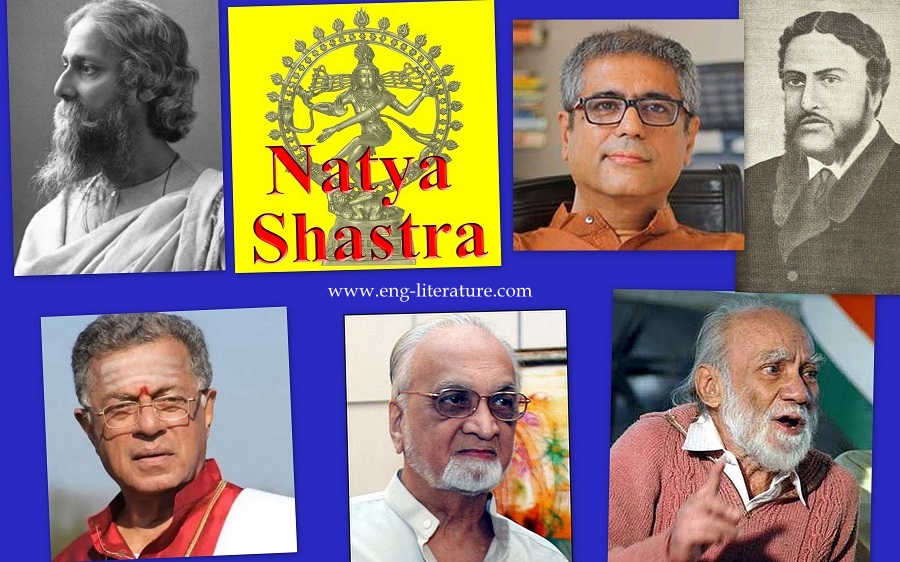
Drama in India has had a rich glorious tradition. It begins its journey with the Sanskrit plays. Indian tradition preserved in the Natyasastra. The oldest of the texts of the theory of the drama, claims for the drama divine origin and a close connection with the sacred Vedas themselves. Origin of English drama can be traced to the ancient rules and seasonal festivities of the Vedic Aryans. The most renowned and talented dramatists of the ancient era are Ashwaghosh, Bhasa, Shudraka, Kalidas, Harsha, Bhavabhuti, Visha-khadatta, Bhattanarayana, Murari and Rajeshkhora, who enriched Indian theatre with their words like Madhya-Mavyaayoda, Urubhangam, Karnabharan, Mrichkatikam, Abhigyana Shakuntalam, Malankagnimitram, Uttar Ramacharitam, Mudrarakshasa, Bhagavadajjukam, Mattavilasa etc.

Pre-Independence Indian English Drama:

The Indian English Drama began in the 18th century when British Empire came and strengthened its political power in India. It is started with the publication of Krishna Mohan Banerjee’s The Persecuted in 1813. It is a social play in which the author tries to present the conflict between the East and the West. The real journey of Indian English Drama begins with Michael MadhuSudan Dutt's Is This Called Civilization which appeared on the literary horizon in 1871. Rabindranath Tagore and Sri Aurobindo, the two great sage - poets of India, are the first Indian dramatists in English worth considering. R.N. Tagore wrote primarily in Bengali but almost all his Bengali plays are available to us in English renderings. His prominent plays are Chitra, The Post Office, Sacrifice, Red Oleanders, Chandalika, Muktadhara, Natir Puja and The Mother' Prayer etc.. These plays are firmly rooted in the Indian ethos and ethics in their themes, characters and treatment. Sri Aurobindo’s complete plays are Perseus the Deliverer, Vasavadutta, Radoguna, The Viziers of Bassora and Eric and each of these plays is written in five acts.

Harindranath Chattopadhyaya added a new dimensions to Indian English drama. He sympathizes with the underdogs same like Mulk Raj Anand. His collection of social plays include The Windows, The Parrots, The Santry Lantern, The Coffin and The Evening Lamps.

Post Independence or Post Modern Indian English Drama

D. M. Borgaonkar’s Image-Breakers (1938) is a problem play that aims to break the conventions of caste system, horoscope, dowry, etc. S. Fyzee- Rahamin’s Daughter of Ind (1940) portrays the conflict between love and social barriers, featuring a low-caste girl loving an Englishman. Balwant Gargi’s The Vulture, Mung-Wa, The Fugitive and The Matriarchdealt with themes which are engaging the attention of people everywhere.”

Another dramatic voice on the Indian literary scene that demands attention is that of T.P. Kailasam. He wrote both in English and Kannada. Though Kailasam is regarded as the father of modern Kannada drama, his genius finds its full expression in his English plays such as The Burden (1933), Fulfilment (1933), The Purpose (1944), Karna (1964) and Keechaka (1949).

Bharati Sarabhai is the modern woman playwright during the colonial era of Indian English drama. She has written two plays The Well of the People (1943) and Two Women with some considerable measure of success.

J.M. Lobo Prabhu is the last great name in pre-Independence Indian English drama. He has written over a dozen plays but only Mother of New India: A Play of India Village in three Acts (1944) and Death Abdicates (1945) appear before Independence.

The use of blank verse is flawless and the last play compels us to remind of T.S.Eliot’ s Murder In The Cathedral. Other verse plays of the period include P.A.Krishnaswami’s The Flute of Krishna (1950) M.Krishnamurti’s The Cloth Of Gold (1951). S.D.Rawoot’s Immortal Song. Karm and The Killers (1959) Satya Dev Jaggi’s The Point Of Light (1967) Pritish Nandy’s Rites for a Plebian Salute (1969). P.S. Vasudev’s The Sunflower (1972) etc.

Nissim Ezekiel’s Three Plays (1969) including Nalini: A Comedy, Marriage Poem: A Tragi Comedy and The Sleep Walkers: An Indo-American farce are considered to be a welcome addition to the dramaturgy of Indian English drama.

Girish Karnad in the capacity of writer, director and actor substantially contributed to enrich the tradition of Indian English theatre. His well known plays are Yayati (1961), Tughlaq (1962), Hayvadana (1970), Nagmandala (1972). He borrowed his plots from history, mythology and old legends.

Vijay Tendulkar symbolizes the new awareness and attempts of Indian dramatists of the century to depict the agonies, suffocations and cries of man, focusing on the middle class society. In the plays Silence! The Court Is In Session (1968) and Ghasiram Kotwal (1972), the theme of oppression dominates. Sakharam Binder (1972) is a study in human violence amounted to powerful dramatic statement.

Gurucharan Das (1943- ) is known for his popular play, Larins Sahib (1970). Set in Punjab, it is about the political career of a British Resident in Punjab. Vera Sharma wrote a number of one act plays, including Life is Like That (1997) and Reminiscence (1997) which deal with the plight of women.

Badal Sircar too is a prestigious name in the realm of contemporary theatre. He represents New Theatrical Movement in India. His earlier plays are Evan Inderjit (1962) That Other History (1964) and There Is No End (1971). All these plays are based on political, social, psychological and existential problems.

Post Independence era witnessed the birth of several one act plays. R. Raja Rao’s The Wisest Fool on Earth and Other Plays (1996) is on the theme of homosexuality. T.S. Gill’s Asoka (1983), V.D. Trivedi’s Gandhi: A Play (1983) and Prema Sastri’s Gandhi, Man of the Millions (1987), Gieve Patel’s Princess, Savaksha and Mr. Behram, Dina Mehta,s The Myth Maker (1959) and Brides Are Not for Burning, Uma Parameswaram (1938- )’s Sons Must Die and Other Plays (1998) are some to quote.

The Post Modern era ushered in new changes in the Indian English drama. Mahesh Dattani (1958- ) a playwright of World stature, has added a new feather to the Indian English drama. His plays deal with serious and sensitive issues like communalism, homosexuality, female infanticide, domestic abuse, child sexual abuse, condition of eunuchs in Indian society. His plays include Where There’s a Will, Tara, Bravely Fought the Queen, Final Solutions, Dance like A Man and Thirty Days in September.

Sum up:

Post-Independent Indian Drama in English falls short of the level reached by poetry and fiction in India. There are four reasons for this: i) drama is essentially a composite art involving the playwright, the actors and the audience in a shared experience on the stage-has its own problem of which the other literary forms are free. ii) As Srinivas Iyenger attributes “the failure to the fact that English is not a natural medium of conversation in India.” iii) Lack of living theatre in our country. iv) The Indian English playwrights do not give much importance to the rich and varied Indian dramatic traditions involving the native myth and Indian historical heritage.

In short, Indo-Anglican literature continues to grow and flourish and this despite all the misguided and prejudiced and politically motivated campaign against English as a foreign language, a language which comes in the way of its growth. More Indians are writing in English than ever before, and the Indo-Anglican writer is enjoying a much wider market. Indo-Anglican drama has, indeed, a bright future.

~~~~~*~~~~~
Share:

Follow Me in Social Media

Get Free Updates

Tags

A Doll's House (1) A Renouncing of Love (1) Absurd Drama (2) African English Literature (2) Agyeya (1) Alexander Pope (7) American Literature (26) Amitav Ghosh (3) Analyses (22) Anglo-Saxon Period (1) Aravind Adiga (1) Arthur Miller (5) Australian Literature (2) Beowulf (3) Bertrand Russell (2) Bible (1) Biographies (12) Book Review (2) British Literature (106) Broad Notes (94) Character Analysis (2) Charles Dickens (1) Charles Lamb (2) Charlotte Bronte (2) Chetan Bhagat (2) Chinua Achebe (1) Christopher Marlowe (2) Classical Literature (2) Composition (4) Creative Writing (5) D. H. Lawrence (1) Daniel Defoe (1) Diaspora (4) Drama (1) Dream Children: A Reverie (1) E-book Download (12) Edmund Spenser (1) Edward Fitzgerald (1) Edward II (3) Elizabethan Era (2) English Language (15) English Literature (9) English Literature Quiz (8) Escapism (1) Essay (12) Essays (12) Eugene O'Neill (7) Explanations (3) Feminism (3) Francis Bacon (4) Frankenstein (4) Free E-book Download (5) Free PDF Download (4) Genre (1) Geoffrey Chaucer (1) George Eliot (4) George Herbert (1) George Orwell (1) Girish Karnad (1) Hard Times (1) Heart of Darkness (1) Henrik Ibsen (1) Henry Vaughan (2) Historical Novel (6) History of English Literature (22) Indian Drama (2) Indian English Poetry (1) Indian Fiction (3) Indian Writing in English (33) Indo-Anglican Literature (32) Interesting Facts (9) Interpreter of Maladies (2) Jane Austen (2) Jane Eyre (2) Jayanta Mahapatra (2) Jhumpa Lahiri (3) John Donne (5) John Dryden (1) John Keats (4) Joseph Addison (1) Joseph Conrad (1) Keki N. Daruwalla (1) Kenilworth (3) Kim (1) Knowledge and Wisdom (1) Leo Tolstoy (1) Linguistics (2) Literary Criticism (5) Literary Essay (9) Literary Facts (1) Literary MCQ (4) Literary Photo Album (1) Literary Terms (14) Literary Trends (1) Literary Types (7) Lord of the Flies (1) Lyric (1) M. K. Anand (2) Mac Flecknoe (1) Macbeth (7) Mahadevi Verma (2) Man Eater of Malgudi (2) Mark Twain (1) Mary Shelley (4) Mathew Arnold (1) Midnight's Children (1) Modern Poetry (3) Modernism (1) Motivational Short Story (21) My Penning (1) Nayantara Sahgal (1) Notes (25) Novel (60) Novels (5) O' Henry (1) Ode to a Nightingale (1) Ode to the West Wind (1) Oedipus Rex. Oedipus the King (2) Of Friendship (1) On Fame (1) Online Quiz (8) Othello (1) P B Shelley (1) P. B. Shelley (1) Paulo Coelho (2) Philological Notes (10) Phonetics (3) Picaresque Novel (5) Plays (41) Poetry (52) Popular Literature (1) Post Colonial Literature (1) Post Colonialism (1) Pride and Prejudice (2) Prosody (3) Quiz (6) Quotations (6) R. K. Narayan (2) Rabindranath Tagore (2) Random Quiz (6) Rape of the Lock (5) Realistic Fiction (1) Restoration Era (2) Rhetoric (2) Robert Browning (1) Robinson Crusoe (1) Romantic Poetry (2) Romanticism (2) Rubaiyat of Omar Khayyam (1) Rudyard Kipling (1) Salman Rushdie (2) Samuel Beckett (3) Sarojini Naidu (1) Seven Ages of Man (1) Shakespearean Influence (2) Shakespearean Plays (11) Shakespearean Sonnets (4) Sheridan (4) Short Notes (10) Short Stories (9) Soliloquy (1) Songs of Innocence (1) Sons and Lovers (1) Sophocles (1) Sri Aurobindo (1) Substance Writing (1) Summary (8) Sylvia Plath (1) T. S. Eliot (2) Texts (10) The Adventure of Tom Sawyer (1) The Alchemist (1) The Crucible (3) The Emperor Jones (7) The Golden Light (2) The Guide (1) The Mill on the Floss (4) The Namesake (1) The Pulley (2) The Rivals (5) The Shadow Lines (3) The Sunne Rising (5) The Superannuated Man (1) The Town Week (1) The White Tiger (1) The Winter's Tale (2) Things Fall Apart (1) Thomas Hardy (2) Thomas Wyatt (1) Toni Morrison (6) Tragedy (3) Tughlaq (1) Untouchable (2) Waiting for Godot (2) Walter Scott (3) Way of the World (1) William Blake (2) William Golding (1) William Shakespeare (14) William Wordsworth (3) Word Notes & Annotations (1) Word Notes & Anotations (2)

Blog Archive