Introduction:
According
to Wheeler the ‘gothic’ was a
pejorative term “used to denigrate objects, people, and attitudes deemed barbarous, grotesque,
coarse, crude, formless, tasteless, primitive, savage, and ignorant”. In
terms of literature, gothic referred to
a type of fiction characterised by gloomy setting, supernatural events,
villains, mystery, suspense and other tropes. Mary Shelley's Frankenstein is by
no means the first Gothic novel. Instead, this novel is a compilation of
Romantic and Gothic element combined into a singular work with an unforgettable
story. It is the outcome of a dream that the 19 years
old novelist experienced.
Other
Popular Gothic Works:
The first Gothic horror novel was The Castle of Otranto by Walpole, published in 1754. Perhaps
the last type of novel in this Emily Bronte's Wuthering Heights, published in 1847. In between 1847,
several other novels appeared using the Gothic horror central story telling
device, The Mysteries of Udolpho
(1794) and (1794) by Ann Radcliffe,
The Monk (1796) by Matthew G.
Melmouth, The Wanderer (1820)
by Charles Maturin, Dracula (1897),
by Bram Stoker.
Gothic Setting:
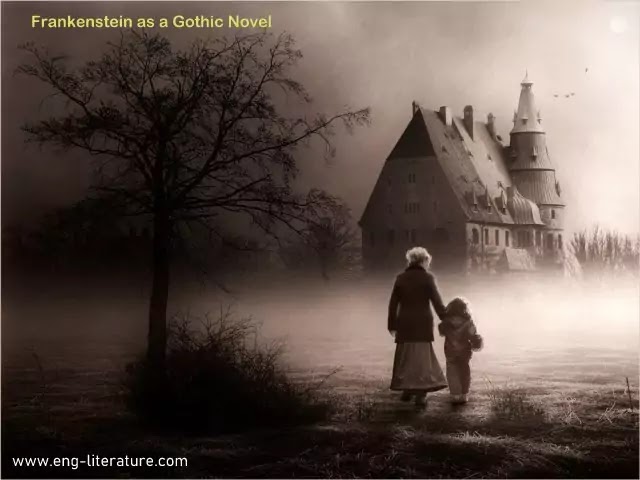
The fine settings within the novel are striking and
distinctively Gothic. Spooky castles, ominous portents, mystery, and suspense:
these are all elements of a Gothic novel. Appropriately, the creature first
breathes on a "dreary night of November." Victor creates his
monster in a remote laboratory at Ingolstadt, while the second "monster"
is begun in a desolate area of Scotland. Elizabeth is killed on a stormy night,
the perfect time for a dramatic murder. The supernatural event, Frankenstein's
creation is one element the author utilizes to support the Gothic genre. The
setting around the creation creates an ominous mood.
Monster’s
Birth; Ominous Dream:
Additionally, the monster's birth results in Shelley's
use of another element of the Gothic genre, Victor's overwrought emotion. The rain
and absence of tight are metaphors for sorrow and distress; the metonymies
further the cheerlessness of the conception scene. The ominous dream, a common
component of Gothic novels, serves as a presage of the monster's savage
homicide of Victor's true love. November, a bleak and gloomy month, marks the
beginning of wintry weather, a time of isolation and cold--the rain pattered
dismally against the panes, and the candle was nearly burnt out Victor dreams
that he saw Elizabeth, in the bloom of health, walking. “I embraced her, but as I
imprinted the first kiss on her lips, they begin livid with the hue of
death?" The supernatural event, portent dream, overwrought emotion
and metonymy of gloom and horror combine to create the haunting and poignant
tale that is Frankenstein.
Ugliness
of Monster:
Furthermore, the dark setting and the paranormal
being are gothic elements that are used by the author to launch fear. The
gothic theme of ugliness is dominant in the novel. In Frankenstein,
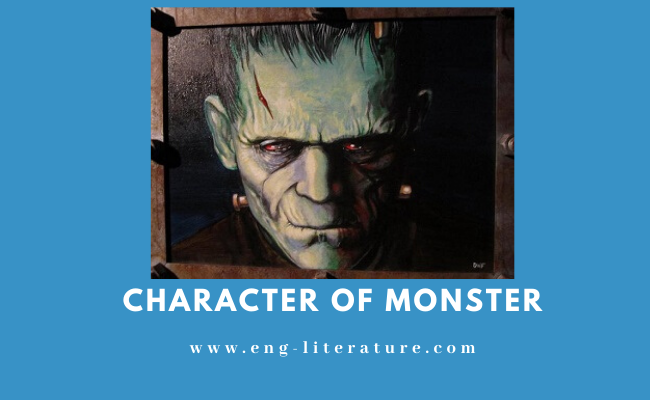
the creature is described as ugly and hideous in appearance: “his eyes,
if eyes they may be called, were fixed on me. His jaws opened, and he muttered
some inarticulate sounds, while a grin wrinkled his cheeks”
Presence
of Darkness:
Another feature of Gothic fiction present
in the novel is darkness. The atmosphere of obscurity and doom is dominant in Frankenstein.
In chapter five, Victor is surrounded by darkness and rain. He is forced to
escape due to heavy rain and ambiguity. He says: “I felt impelled to hurry on,
although wetted by the rain which poured from a black and comfortless sky”
Wet,
Obscure and Stormy Weather:
Furthermore, the wet setting, pervaded by
the utmost darkness, heralds the doom of the protagonist: “I foresaw obscurely that I was
destined to become the most wretched of human beings”. The author uses
wet and stormy weather, darkness and obscurity, which are elements from the Gothic fiction, to increase the suspense for readers and to arrange the
appearance of the creature.
Haunting:
Haunting is a crucial element in the plot.
Jerrold E. Hogle states that “the hauntings associated with the Gothic often arise from the antiquated settings”. Victor is chased by his
modern achievement in antiquated and sublime landscapes like the Arctic and the
isolated island.
Unknown
and Distant region:
Also, far away places that seem mysterious to the
readers function as part of the Gothic novel's setting, Frankenstein is set in
continental Europe, specifically Switzerland and Germany, where many of
Shelley's readers had not been. Further, the incorporation of the chase scenes
through the Arctic regions takes us even further from England into regions
unexplored by most readers.
Bridge
between Mortal and Supernatural World:
In the Gothic novel, the characters seem to bridge the
mortal world and Supernatural world, Dracula lives as both a normal
person and as the undead, moving easily between both worlds to accomplish his aims.
Likewise, the monster seems to have some sort communication between himself and
his creator, because the monster appears wherever Victor goes. The
monster also moves with am superhuman speed with Victor matching him in the
chase towards the North Pole. Thus, Mary Shelley combines several ingredients
to create memorable novel in the Gothic tradition.
Theme
of Death:
Finally, the Gothic takes the theme of death in an
interesting direction overcoming the limits of mortality is a major concern. On
a certain level, Victor's interest in creating life is an extension of this
desire to escape death. By assembling the body parts of the dead, Victor makes
a "monster" who is part human and part ghost. Like a tormented
spirit, his creation haunts the living.
Conclusion:
Though
Mary Shelley's Frankenstein, written in the early 19th century, certainly
contains many components of a Gothic novel, it cannot be correctly grouped
under that genre. Shelley employs various literary devices to support the
elements, a supernatural event, portent dream, overwrought emotion, and
metonymy of gloom, which classify Frankenstein as a Gothic novel.
~~~~~*~~~~~